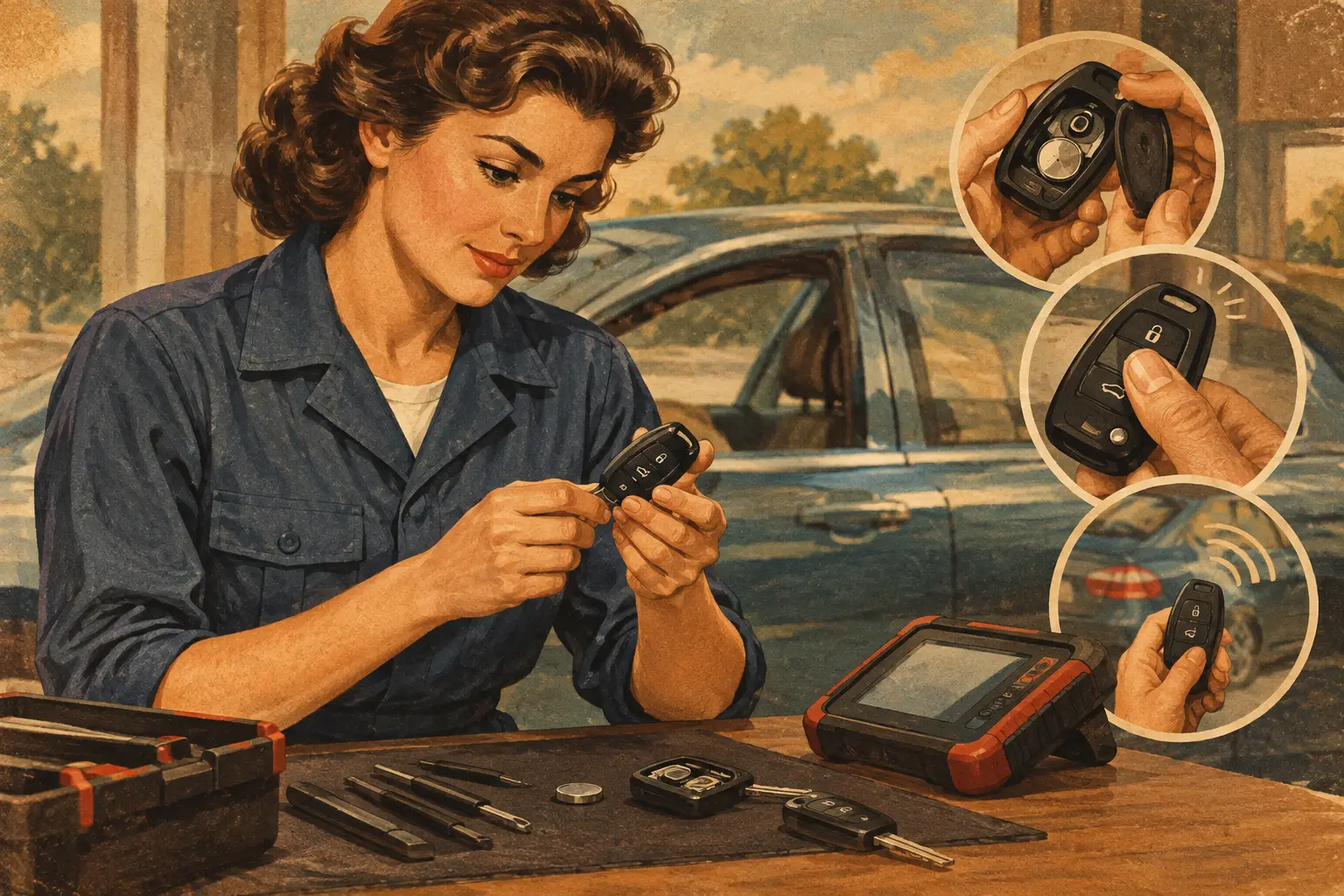
Your car is parked outside, the key is in your hand and nothing happens. Before assuming the worst, knowing how to diagnose car key failure can help you separate a simple battery issue from a fault that needs professional attention. The key is to check what the vehicle is actually doing, rather than repeatedly pressing buttons or forcing the key into the ignition.
A car key can fail in several different ways. The remote buttons may stop working while the vehicle still starts. The blade may turn but the car will not recognise the transponder chip. Or the key may be physically damaged, making it difficult to enter the vehicle or operate the ignition. Each symptom points towards a different part of the key and access system.
Start with the exact symptom
The most useful first step is to identify whether the problem is with remote locking, vehicle entry, starting, or all three. This saves time and avoids replacing parts that are not causing the fault.
If the remote will not lock or unlock the doors but the key starts the vehicle, the issue is often within the remote fob. A flat battery, worn buttons, damaged circuit board or a loose battery connection are common causes. If the doors open with the blade but the vehicle will not start, the fault is more likely to involve the transponder chip, key programming or the vehicle’s immobiliser recognition.
When neither the remote nor the key blade works properly, inspect the key closely. A cracked case, bent blade, damaged flip mechanism or signs that the key has been wet can all explain the failure. Do not force a stiff key into a lock or ignition. A damaged blade can snap, turning a straightforward key issue into a vehicle entry and extraction job.
Test the spare key if you have one
A working spare is one of the clearest diagnostic tools available. If your spare key locks, unlocks and starts the vehicle normally, the car itself is likely to be fine and the original key is the problem.
If both keys fail in exactly the same way, the cause may be on the vehicle side. For example, there could be an issue with the car battery, central locking system, ignition reader or immobiliser system. An auto locksmith can assess the key and vehicle communication before deciding whether a replacement or repair is appropriate.
For van drivers and tradespeople, this check matters because a key fault can stop a full working day. Having a tested spare key stored safely, rather than in the van, provides a quick comparison and a practical backup.
How to diagnose car key failure at home
There are a few safe checks you can carry out without specialist equipment. They will not fix every problem, but they can give a professional a much clearer description of the fault.
First, consider the fob battery. If the key has gradually become less responsive, only works very close to the vehicle, or has stopped operating the buttons altogether, a weak battery is a sensible first suspect. Replace it with the correct battery type, fitted in the right orientation. Take care when opening the fob, as clips, buttons and circuit boards can be damaged easily.
Next, look for physical wear. The rubber button pad may be split or worn through, especially on keys used daily for several years. A flip key may have a loose or weak blade mechanism. On older keys, the metal blade can become worn and no longer operate the door lock or ignition cleanly. If it feels rough, catches, or needs wiggling to turn, stop forcing it.
Then think about recent events. Has the key been dropped, washed, exposed to heavy rain, sat under a drink bottle in a cup holder, or run over in a driveway? Water and impact damage can affect the circuit board, remote aerial, battery contacts and transponder chip. Sometimes the key will work intermittently after damage, which is a warning sign rather than a reason to ignore it.
Finally, pay attention to the dashboard. If the engine cranks but will not start, or an immobiliser or key warning light appears, the vehicle may not be reading the chip in the key. A remote battery change does not usually erase a key’s programming, but a damaged chip or failed electronics can prevent the car from recognising it.
Common faults and what they usually mean
Not every failed key needs replacing. In many cases, the most cost-effective option depends on the key type, its condition and whether the vehicle still has a working key available.
A flat remote battery is the simplest issue. The vehicle may still start because the transponder chip is separate from the remote functions. Replacing the battery can restore locking and unlocking, but it will not repair cracked solder joints, damaged buttons or water-damaged electronics.
A worn or snapped key blade is a physical fault. It may prevent entry through the door lock or make the ignition difficult to turn. Precision key cutting from the correct key data is far more reliable than copying a heavily worn blade. If a blade has snapped in the ignition or door, avoid trying to dig it out with improvised tools, as this can damage the lock further.
A key that unlocks the car but will not start it often has a transponder or programming issue. The remote section and immobiliser chip perform different jobs. This is why a key can appear to work normally at the doors while the vehicle refuses to start.
A key that starts the vehicle but has no remote function may need remote repair, refurbishment or replacement. Depending on the make and model, a specialist may be able to repair the existing fob, transfer components into a new case, or supply and programme a replacement key.
When the ignition may be the real problem
It is easy to blame the key when the ignition is at fault. If the blade enters normally but will not turn, only turns after repeated attempts, or feels unusually loose, the ignition barrel may be worn or damaged. A key cut from a worn original can also make this harder to identify.
Try the spare key once, gently. If both keys behave the same way in the ignition, do not keep applying force. The problem may be with the ignition rather than the keys. Professional ignition repairs can address the actual cause without unnecessary key replacements.
Push-button start vehicles create a slightly different picture. If the vehicle displays a key-not-detected message, hold the fob in the position specified by the vehicle handbook where possible. Many vehicles have an emergency recognition point for a weak fob battery. If it still cannot detect the key, the fob, its battery contacts or the programming may need testing.
Avoid these costly mistakes
A car key problem is stressful, particularly when you are away from home or need a van for work. A few mistakes can make the situation more complicated.
Do not repeatedly press the remote buttons for long periods when the key is behaving oddly. This rarely restores a failed fob and can drain a weak battery further. Do not glue a cracked key case shut around the electronics, as it may make future repair more difficult. And do not use excessive force on a key that will not turn in the ignition.
Be cautious with generic replacement fobs bought without checking compatibility. A key may look identical but have the wrong chip type, frequency, blade profile or programming requirements. Many modern keys need specialist equipment to programme correctly to the vehicle. For an all-keys-lost situation, the process is more involved again because a new key must be created and programmed with no working original to copy.
Get the right help before you are stranded
If your key works intermittently, arrange a repair or spare before it fails completely. A failing key often gives warning signs: reduced remote range, buttons that only work at certain angles, a loose case, a stiff blade or occasional immobiliser messages. Acting early is usually simpler than dealing with a lockout or lost-key situation later.
For car and van owners in Oldham and Greater Manchester, HP Car Keys can assess failed remotes, cut and programme replacement keys, repair damaged fobs, deal with snapped keys and diagnose key or ignition-related faults. Where a key cannot be repaired, the aim is to provide the right replacement and get you back on the road.
A key is easy to overlook while it works. Once it starts showing signs of trouble, treat that as your chance to sort it on your terms, with a tested spare ready for the next journey.
Leave a Reply