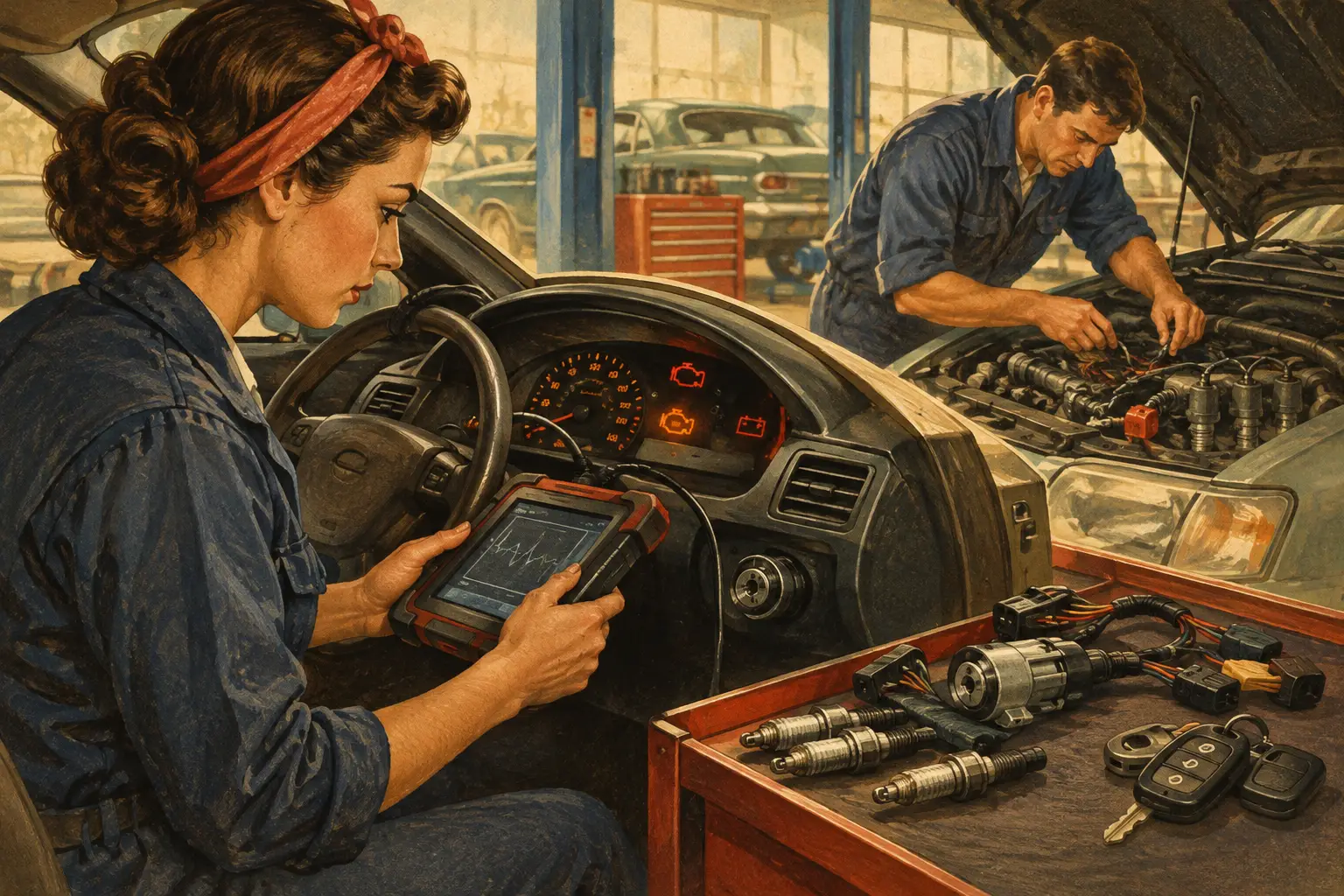
A key that suddenly will not turn can stop a normal day in seconds. You may be outside work, on a school run or loading tools into a van, only to find the vehicle will not start. Knowing the signs a car ignition needs repair can help you act before a worn ignition leaves you stranded or damages your key.
The ignition is more than the slot where the key goes. Depending on the vehicle, it works alongside the key blade, transponder chip, steering lock and electrical switch that allows the vehicle to start. A fault in one area can feel much the same as a fault in another, which is why a proper check matters.
1. The key is difficult to turn in the ignition
A key that needs jiggling, extra pressure or several attempts before it turns is one of the most common warning signs. The ignition barrel may be worn internally, or the key itself may have worn edges that no longer line up cleanly with the pins inside the barrel.
Do not force it. Twisting a reluctant key can snap the blade in the ignition, turning a repairable problem into a more urgent vehicle entry and key extraction job. If a spare key turns more smoothly, the original key may be the issue. If both keys stick, the ignition barrel is more likely to need attention.
It can also help to check the steering wheel position. On some vehicles, pressure against the steering lock can make the key feel jammed. Gently move the steering wheel side to side while turning the key normally. If the problem keeps returning, it should not be ignored.
2. The key turns, but the vehicle does not respond
Sometimes the key turns through the usual positions, but the dashboard does not light up as expected or the vehicle does not respond when you try to start it. This can point to a worn ignition switch or a problem with the ignition assembly rather than the key blade alone.
An intermittent fault is particularly frustrating. The car or van may start perfectly one morning, then fail later the same day. Avoid assuming it will sort itself out. Electrical contact faults often become more frequent, and waiting until the vehicle will not start at all can create unnecessary disruption.
There are other possible causes of a non-start, including battery and vehicle electrical issues. The key point is the pattern: if the fault happens when you turn or hold the key in a certain position, the ignition needs professional assessment.
3. The key will not come out
A key stuck in the ignition is inconvenient, but it can also be a security concern. You may be unable to lock the vehicle properly or leave it safely where it is. On automatic vehicles, the key can sometimes remain trapped if the selector is not fully in Park, but a worn ignition barrel or release mechanism can cause the same symptom.
Do not pull hard on the key or use pliers. That risks bending or breaking it, and a damaged key can make the ignition harder to repair. Keep the vehicle secure and arrange specialist help to identify whether the issue is the key, barrel or related mechanism.
4. The key feels loose or catches in certain positions
Your key should turn with a positive, controlled feel. If it has become noticeably loose, catches halfway through a turn or needs to be held in an unusual position to keep the vehicle running, the ignition may be wearing out.
This is especially worth addressing on work vans. A van that starts only after repeated attempts can lose valuable time at the beginning of every job. It also creates uncertainty when you have deliveries, customers or equipment to get to.
A worn key can accelerate the problem. Over years of use, the cuts on a key blade lose definition, particularly where the key has been used to open doors, scrape something or carried loose with heavy keys. A correctly cut replacement or refurbished key may resolve the issue in some cases, but the barrel should be checked if there is already stiffness or looseness.
5. The key has snapped, bent or shows visible wear
A snapped key in the ignition is an obvious sign that something needs dealing with, but visible damage is worth taking seriously before it reaches that point. Look for cracks around the plastic head, a blade that has started to bend, worn grooves or a blade that looks polished and rounded compared with a spare.
Modern vehicle keys often contain a transponder chip or remote electronics as well as the metal blade. Simply copying the shape of the blade is not always enough to start the vehicle. Professional key cutting, programming and key repair help ensure the replacement works correctly with the vehicle.
If you have one working key left, arranging a spare before it fails is usually the calmer option. It can also prevent an all-keys-lost situation, where no functioning key is available for the vehicle.
6. The immobiliser warning appears or starting is inconsistent
If the key turns but an immobiliser light stays on, flashes unexpectedly or the vehicle starts briefly and then cuts out, the fault may involve the key’s transponder chip or its communication with the vehicle. This is not always an ignition barrel fault, but it is often mistaken for one.
Try a known-working spare key if you have one. If the spare starts the vehicle normally, the main key may need repair, replacement or programming. If neither key works consistently, a specialist can assess the key and ignition-related components without guessing.
This is where general key-cutting services can fall short. Many vehicles need the correct equipment and knowledge to programme a replacement key properly. For cars and vans, the aim is not just to make a key that fits, but one that restores reliable starting and access.
7. You have had repeated ignition problems after a lost or damaged key
A replacement key that is poorly cut, excessively worn or not programmed correctly can create symptoms that look like an ignition fault. Likewise, using a damaged key for too long can wear the barrel further. If problems began after a key was replaced, repaired or damaged, mention this when arranging help.
The right solution depends on the vehicle and the fault. It may be a precision-cut replacement key, key programming, a repaired remote, snapped-key extraction or ignition repair. A specialist should avoid replacing parts unnecessarily and focus on the part of the system causing the problem.
When to stop trying and arrange help
Stop using the key if it is bending, cracking, sticking badly or feels close to snapping. Repeatedly forcing it can damage the ignition barrel and leave the vehicle inaccessible. If the key is already stuck or broken, avoid attempting makeshift removal tools, as these can push fragments further into the ignition.
It is useful to have the vehicle make, model, registration and a clear description of what happens when you turn the key. Let the specialist know whether you have a spare, whether the remote buttons still work and whether the key has ever been damaged or wet. These details help narrow down whether the likely issue is the key, programming, ignition barrel or ignition switch.
For drivers across Oldham and Greater Manchester, HP Car Keys provides professional car and van key services, including key repairs, programming, replacement keys, snapped-key extraction and ignition-related repairs. Getting the fault checked early gives you the best chance of protecting the key, keeping the vehicle secure and getting back on the road without a bigger interruption.
Leave a Reply